
Floyi AIRS Analyzer: See Your AI Search Visibility
See where AI search cites you or your competitors across ChatGPT, AI Overviews, Perplexity, Gemini, Grok and more, then turn the gaps into a content plan.
Search used to hand you a list of blue links. Now it hands people an answer.
That answer names some brands and ignores others. It cites some sources and skips the rest. And most of the time, you never see the one your customers are reading.
You can’t optimize what you can’t see.
For a decade the job was to rank. You checked a position, you knew where you stood. That signal still matters, but it no longer tells the whole story. You can sit at position one and never get mentioned in the AI Overview sitting above you.
So the question changed. It is no longer only “where do I rank.” It is “when an AI answers this, does it know I exist.”
I’ve watched brands rank in position one and still go unnamed in the AI answer sitting right above them. The citation is there. The mention is not.
So you want the whole picture. Every engine, every answer, for the queries your buyers actually ask.
The Problem With Checking by Hand
You can open ChatGPT, type your query, and read the answer. Then do it again in Perplexity. Then Google AI Mode. Then Gemini. Then Copilot. One-by-one.
Now do that for fifty queries. Now do it for your five competitors too. Now do it again next month to see what moved.
That doesn’t scale. And a single screenshot tells you nothing about the pattern: which engines cite you, which topics treat you as a source, and which ones describe your entire market without you in it.
That’s why we built the AIRS Analyzer.
You can run an AIRS report and see the whole pattern at once.
What AIRS Does
AIRS, short for AI Results, runs one query across every classic search and AI search surface that matters and lays the answers side by side.
It queries eleven tools in a single analysis: Google and Bing SERPs, plus Google AI Mode, Google AI Overviews, Bing Copilot, Claude, Gemini, Grok, OpenAI Web, Perplexity, and ChatGPT. Then it gives you a comparison matrix: where you appear, where you do not, and what each engine cited to build its answer.
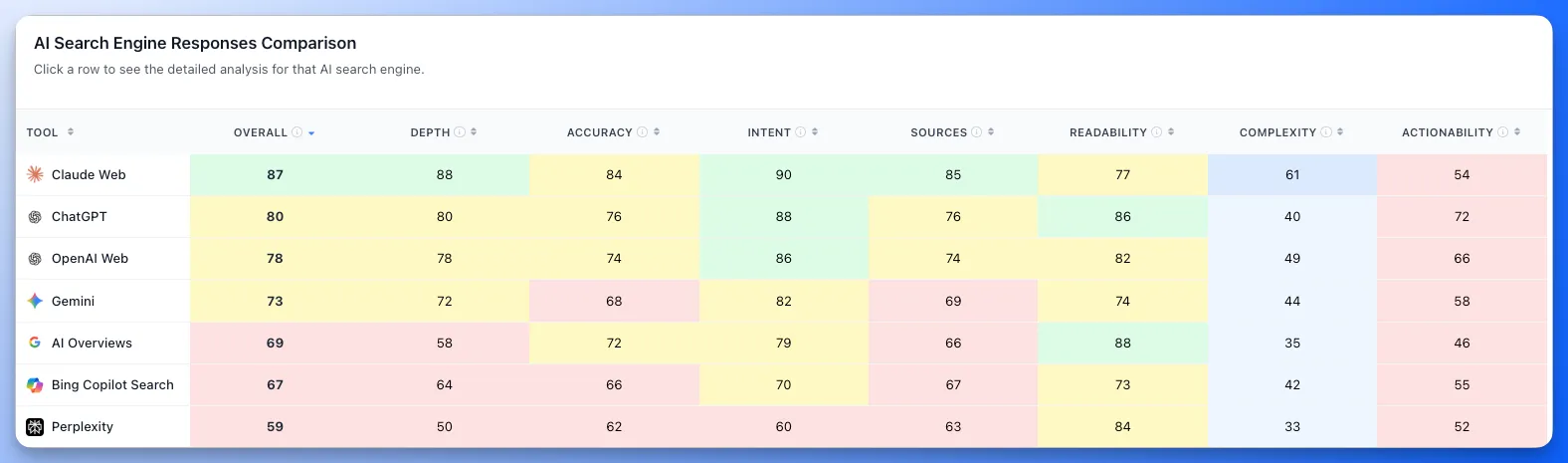
You get one overall visibility score, from High down to Not Visible, based on how many of those surfaces cite you. High means seven or more tools, Medium four to six, Low one to three, Not Visible none. The matrix underneath shows exactly which tools those are. You can add up to ten competitors to the same report and see which brands own the citations you are missing.
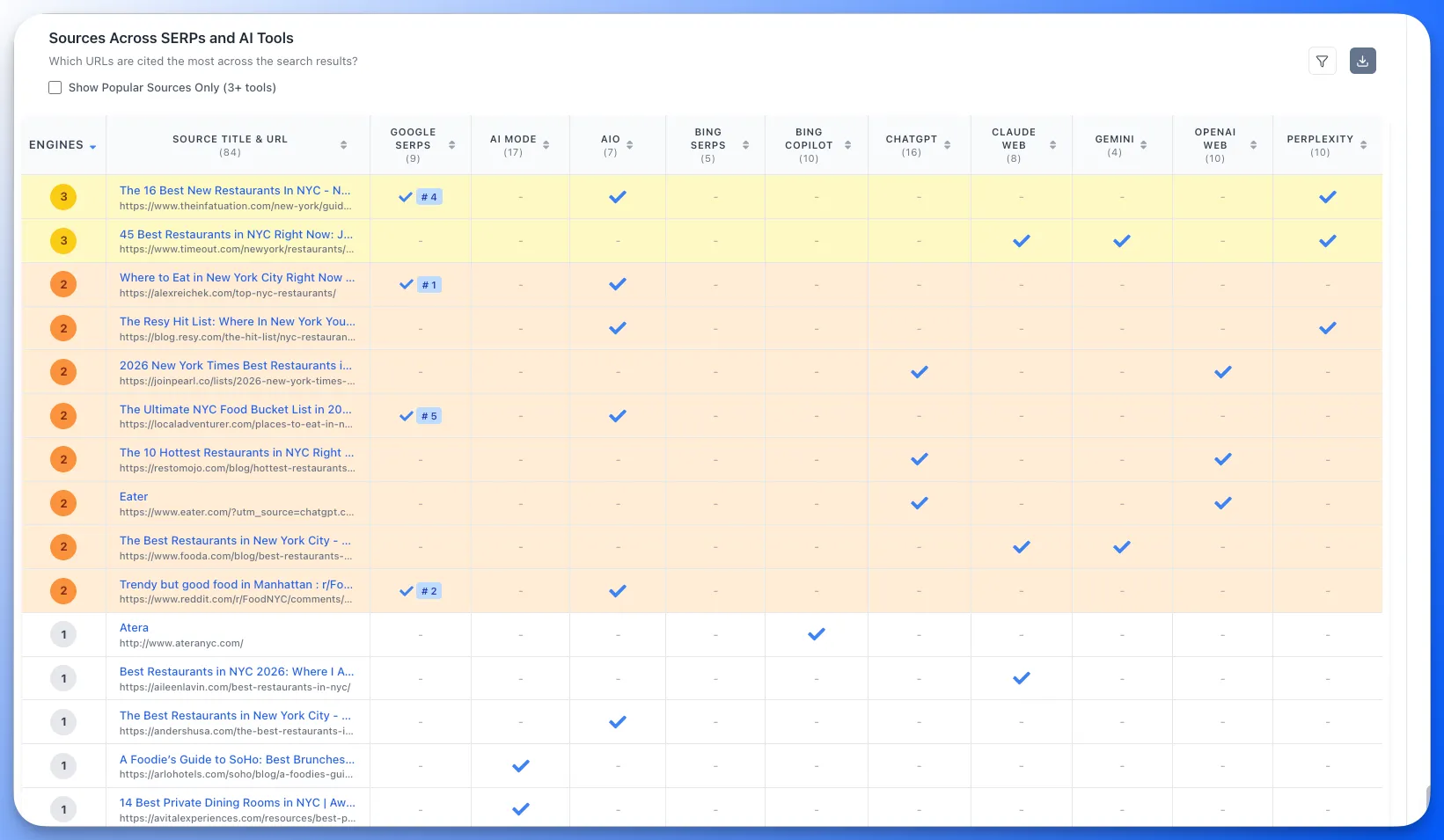
Then you read the strategic insights, drill into any single engine’s response, and export the whole thing to DOCX or PDF for a client or a stakeholder who needs the picture without the tool.
Mentions Are Not Citations
Here is the distinction most AI-visibility checkers blur.
Being named in an answer is a mention. Being linked as a source the answer was built from is a citation. They are not the same, and they do different jobs. A mention puts your brand in front of the reader, right there in the answer. A citation makes you the source the answer leans on, and sends the click that comes with it. You want both. Mentions build the awareness and authority that compound into citations over time. If that distinction is new to you, why mentions and citations are not the same is worth a read.
AIRS reads both sides: the brands and entities each answer names, and the sources each engine cites. So you can see where you show up, where a competitor shows up instead, and where you are nowhere at all. Those named entities feed the content blueprint, so a gap becomes a brief with the titles, entities, and links to fix it, not just a chart. That is the map of where your authority is real, where it is soft, and where it does not exist yet.
This is the measurement layer generative engine optimization has been missing. You cannot do GEO or AEO on feel. You need to see which sources the engines actually trust for your topics, then earn your way into that set.
What to Do With It
A report is only useful if it changes what you ship next.
- Run AIRS on the ten queries that matter most to your revenue, not your ego. Buyer-intent questions, not vanity terms.
- Add your top three competitors to the same report.
- Find the queries where they are cited and you are not. That is your target list.
- Look at what those engines cited. That is your brief.
- Publish against the gap, then re-run the report to see if the answer changed.
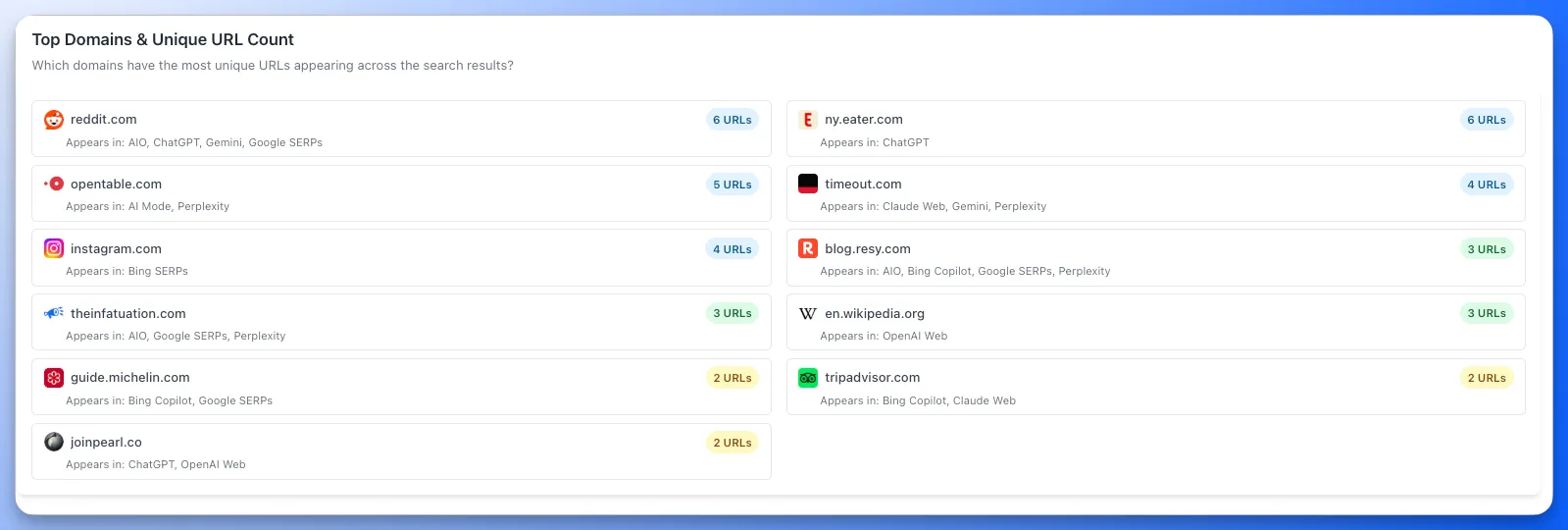
The gaps do not stay in a spreadsheet. Feed them into Floyi and turn those gaps into a publishing plan inside Topical Authority, so every AIRS finding becomes a topic you can prioritize, brief, and draft. And once you are running reports regularly, you can monitor AI search from a chat instead of opening the tool every time.
If you want the setup details and every option in the report, set up your first AIRS analysis in the docs.
The brands that win the next few years of search will not be the ones with the most rankings. They will be the ones the answer engines cite when someone asks.
You cannot become one of them by guessing. First you have to see what the machines see.
So: when AI answers a question about your market, does it name you, or does it name the competitor who bothered to measure?
About the author

Yoyao Hsueh
Yoyao Hsueh is the founder and CEO of Floyi, the topical authority platform, and the founder of Main Heading, an SEO and AI search agency. He created Topical Maps Unlocked, a course studied by thousands of SEOs, content strategists and digital marketers, founded TopicalMap.com, a done-for-you topical mapping service for agencies and enterprise teams, and publishes the weekly Digital Surfer newsletter on SEO, content strategy and AI search.
About Floyi
Floyi is a closed loop system for strategic content. It connects brand foundations, audience insights, topical research, maps, briefs, and publishing so every new article builds real topical authority.
See the Floyi workflow